Oregon Light Oregon Light

2026 Best Transformers for Safe Underwater Lighting?

Time:2026-10-28 Author:Ethan
0%

Choosing a transformer for underwater lighting is not just a wattage decision. Water, electricity, heat, and human contact create a demanding installation environment. The wrong enclosure or connection can turn a calm pool deck into a serious electrical hazard.

So, what are the safest transformers for underwater lighting? In 2026, the strongest choices usually include listed low-voltage isolation transformers designed for wet locations. Look for reinforced insulation, thermal overload protection, corrosion-resistant housings, and clear compatibility with LED fixtures. Ground-fault protection remains essential, although exact requirements differ by location. A qualified electrician should verify the installation.

Electrical safety educator Mike Holt is widely associated with this practical warning: “Safety is not expensive; accidents are.” The message applies directly here. A cheaper transformer may appear attractive beside a pool, but poor heat management or weak sealing can create costly trouble later.

This guide compares transformer designs, certifications, load capacity, and real installation details. It considers what happens inside a damp equipment room, where salt air reaches terminals and cables run through crowded conduit. Manufacturer instructions matter. So do inspection records.

There is no universal “safest” model for every pool, fountain, or spa. That is an uncomfortable truth. A transformer suitable for a garden fountain may be unsuitable for a submerged pool fixture. Even a reputable product can fail when overloaded, incorrectly bonded, or installed beyond its rated environment.

The best decision combines verified product data, professional installation, and cautious maintenance. Beauty comes second. Safe isolation comes first.
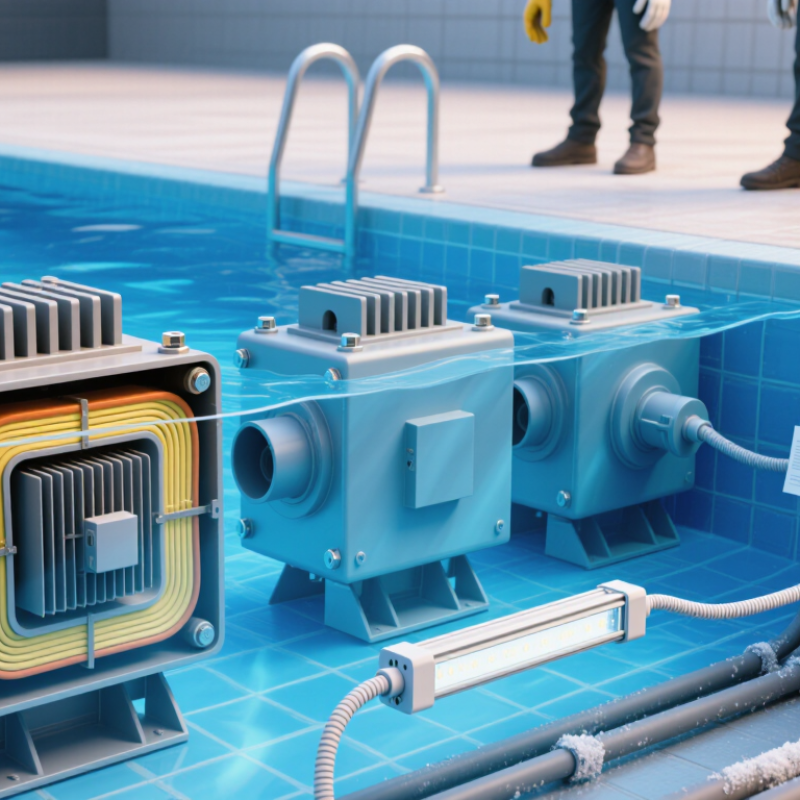
2026 Best Transformers for Safe Underwater Lighting?

Understanding Transformers in Safe Underwater Lighting Systems

2026 Best Transformers for Safe Underwater Lighting?

Understanding transformers in safe underwater lighting systems starts with voltage, isolation, and heat control. A suitable transformer should provide separated low voltage, stable output, and enough capacity for startup surges. Extra capacity matters. I usually allow 20% to 30% headroom above the connected lighting load. This reduces overheating inside a damp equipment cabinet.

The U.S. Department of Energy reports that LED lighting can use at least 75% less energy and last up to 25 times longer than incandescent lighting. Lower consumption helps, but it does not remove electrical risk.

A transformer still needs appropriate insulation, grounding, overcurrent protection, and residual-current protection. IEC 60598-2-18 addresses safety requirements for luminaires used in swimming pools and similar locations.

The transformer enclosure should also resist corrosion, condensation, and accidental water entry.

Look closely at the installation details.

A 12-volt output may be safer than line voltage, but poor cable joints can still allow leakage near water. Keep connections above splash zones when possible. Check cable length and voltage drop, especially beside a long pool wall.

In practice, specifications can look perfect while ventilation remains inadequate. I have seen compact enclosures become surprisingly hot after several hours. That deserves more attention. A qualified electrician should verify the complete system, including protection devices, bonding, enclosure location, and measured load before commissioning.

Choosing Voltage, Power, and Load Ratings for Submersible Fixtures

2026 Best Transformers for Safe Underwater Lighting?

Choosing Voltage, Power, and Load Ratings for Submersible Fixtures

Selecting a transformer for underwater lighting starts with the fixture’s exact voltage. A 12-volt fixture should not receive 24 volts, even briefly. Excess voltage can overheat wiring, shorten lamp life, and damage sealed components. Check the fixture label, installation guide, and measured output voltage under load. Do not trust appearance alone.

Power capacity matters just as much. Add the wattage of every connected fixture, then allow extra capacity for startup current and future additions. A practical target is keeping continuous demand near 80% of the transformer’s rated output. For example, four 20-watt fixtures need 80 watts, but a 100-watt transformer may leave little useful margin. Larger cable runs can create voltage drop. A light may glow normally near the transformer but appear noticeably dim at the far end. Measure it there.

The transformer enclosure must suit its location, while the fixture and cable require their own suitable ratings. A dry, ventilated transformer room is usually easier to inspect than a crowded equipment box. Ground-fault protection and local electrical requirements also deserve attention from a qualified professional. I have seen specifications focus heavily on wattage while ignoring cable distance and connection quality. That is an incomplete assessment. Load calculations should include actual cable length, connector losses, water exposure, and possible maintenance changes. Leave room for correction.

2026 Best Transformers for Safe Underwater Lighting

Choosing voltage, power, and load ratings for submersible fixtures

The comparison uses typical low-voltage underwater-lighting design cases. Transformer capacity is sized at approximately 125% of the connected fixture load to provide operating margin. Confirm that the transformer secondary voltage matches the fixtures, verify the total wattage, and use equipment approved for wet locations in accordance with local electrical requirements.

Comparing Transformer Designs for Pools, Fountains, and Marine Use

2026 Best Transformers for Safe Underwater Lighting?

Comparing Transformer Designs for Pools, Fountains, and Marine Use

Underwater lighting starts with the transformer, not the lamp. In pool installations, a safety isolation transformer should keep hazardous mains voltage away from wet locations. I prefer low-voltage systems with stable output, protected terminals, and clear load ratings. The transformer must remain in a dry, ventilated enclosure. Never place it inside a submerged housing.

Pools usually benefit from electronic or toroidal transformers designed for steady low-voltage lighting. Electronic models can be compact and efficient, but poor units may create flicker or electrical noise. Toroidal designs are heavier, yet they often provide smoother output and better tolerance for long cable runs.

Cable length matters. Voltage drop can make a bright light look weak at the far end. A qualified electrician should verify grounding, bonding, residual-current protection, and local installation requirements.

Fountains need extra attention to splash zones, pump vibration, and changing water levels. A sealed enclosure and corrosion-resistant connections are essential. Marine environments are harsher still. Saltwater accelerates corrosion, so isolation, cable glands, and protective coatings deserve careful inspection.

Constant-current transformers can suit some purpose-built fixtures, while constant-voltage models work better with compatible low-voltage lamps. They are not interchangeable.

I have seen installers choose by wattage alone. That is an easy mistake. Heat, distance, water chemistry, and future expansion also affect reliability. My own preference is conservative sizing, although oversized transformers can waste energy and complicate fault protection. Test the system under real conditions, not only on a dry workbench.

Applying Grounding, Isolation, and Protection Measures in Wet Locations

2026 Best Transformers for Safe Underwater Lighting?

Underwater lighting demands more than a suitable voltage rating. Moisture can enter through damaged seals, loose glands, or condensation inside a junction box. A safety isolation transformer should separate the lighting circuit from the supply and match the luminaire’s rated voltage and load. Its enclosure must suit the installation zone, not merely the indoor electrical room.

Grounding remains essential. Bond exposed metal parts, junction boxes, and conductive pool structures according to IEC 60364-7-702 and applicable national codes. Ground-fault protection should disconnect rapidly when leakage occurs. It is not a substitute for isolation. Both controls matter.

NFPA’s report on electrical distribution and lighting equipment links these systems to about 32,000 U.S. home structure fires annually, based on 2016–2020 data. The report also records roughly 470 civilian deaths and 1,100 injuries each year. Underwater lighting represents a narrower risk, but wet conditions can magnify small installation errors. A 2023 OSHA electrical-safety review recorded 126 workplace electrical fatalities, showing why protective design cannot depend on routine caution alone.

During commissioning, measure insulation resistance, verify bonding continuity, and test the residual-current device under realistic load. Inspect cable entries after several heating and cooling cycles. Small details matter. I would not trust a transformer selected only by wattage. Temperature rise, fault current, accessibility, and inspection history also deserve attention. Even a compliant design can fail when maintenance records are incomplete.

Evaluating 2026 Transformers by Efficiency, Certification, Controls, and Maintenance

2026 Best Transformers for Safe Underwater Lighting?
Evaluating 2026 Transformers by Efficiency, Certification, Controls, and Maintenance

Selecting a transformer for underwater lighting requires more than checking wattage. Measure actual load, startup demand, and expected expansion. High-efficiency units reduce heat inside crowded service cabinets. They also waste less energy during long evening operation. Thermal performance matters. A transformer running near its limit may shorten insulation life, especially in warm equipment rooms.

Certification should match the installation environment and local requirements. Look for independently tested protection, suitable insulation, grounding provisions, and clearly documented temperature limits. Enclosures need appropriate moisture and corrosion resistance. A certificate alone is not enough. Verify its scope, test date, and installation conditions. That small document check can prevent a costly mismatch.

Controls should support smooth dimming, timers, fault monitoring, and emergency isolation. Confirm compatibility before connecting digital controls. Some systems dim poorly at low loads. That detail is easy to miss. Maintenance teams should inspect terminals, cable entries, seals, and discoloration during scheduled visits. Record voltage, current, cabinet temperature, and nuisance trips. Cleaning dust from ventilation paths can improve cooling, but sealed units still require careful inspection. One practical weakness remains: published efficiency figures may not represent partial-load operation. Testing the transformer with the real lighting circuit gives more useful evidence. Allow space for future access, even when the cabinet looks oversized.

2026 Best Transformers for Safe Underwater Lighting? — Evaluating 2026 Transformers by Efficiency, Certification, Controls, and Maintenance
Transformer Type Typical Use for Underwater Lighting Typical Capacity Range Typical Transformer Efficiency Safety and Certification Path Control Compatibility Maintenance Profile Overall Suitability
Encapsulated Electronic Safety Transformer Small LED pool, fountain, spa, and architectural water-feature systems where compact size and low standby consumption are important. 60–300 VA Approximately 88–95% at rated load; efficiency can decrease at very light load. Select a model evaluated as a safety isolating transformer and confirm compliance with the applicable installation rules. The enclosure should be suitable for its location, with the required ingress protection and temperature rating. Compatible with switched input, timer, photocell, and some manufacturer-approved dimming interfaces. Electronic dimming must be verified; ordinary dimmers are not automatically suitable. Sealed construction generally reduces dust and moisture-related servicing. Replace the complete unit if internal electronics fail. Best for compact LED systems
Encapsulated Magnetic Safety Transformer Low-voltage underwater luminaires requiring robust galvanic isolation and predictable operation without complex electronic controls. 100–1,000 VA Approximately 90–96% at rated load, depending on size and winding design. Look for safety-isolating transformer evaluation under the applicable IEC 61558 or equivalent national standard. Installation near water must also satisfy local electrical codes and bonding requirements. Works well with on/off contactors, time switches, photocells, and properly rated phase-control equipment. LED compatibility should be confirmed because some lamps have minimum-load or inrush-current requirements. Normally limited to visual inspection, terminal tightening during scheduled shutdowns, and insulation testing by qualified personnel. Encapsulation helps protect windings from humidity. Strong general-purpose option
Toroidal Safety Transformer Quiet indoor plant rooms, premium residential pools, spas, and visual installations where low audible hum and compact dimensions are priorities. 50–500 VA Approximately 92–97% at rated load. Certification should cover safety isolation, dielectric strength, thermal protection, and the intended supply voltage. A toroidal shape alone does not prove suitability for wet or damp locations. Suitable for switched circuits and many low-voltage control systems. Use a soft-start device or manufacturer-approved protection where repeated energization or high LED inrush is expected. Low routine maintenance, but mounting hardware should be checked because mechanical vibration and inrush current can loosen connections over time. Best where low noise matters
Resin-Cast Dry-Type Transformer Commercial pools, fountains, water features, and larger lighting groups requiring higher capacity and improved environmental durability. 0.5–5 kVA Approximately 95–98% at rated load. Verify the applicable dry-type transformer standard, insulation system, temperature rise, short-circuit withstand, and enclosure rating. Outdoor or splash-prone installations require an appropriately rated cabinet and cable entries. Well suited to contactors, programmable controllers, 0–10 V systems, and digitally controlled lighting when the control equipment is installed on the correct side of the isolation barrier. No oil sampling is required. Maintenance normally consists of cleaning ventilation paths, inspecting terminals, checking thermal protection, and testing insulation at defined intervals. Best for larger installations
Conventional Laminated-Core Safety Transformer Simple, serviceable low-voltage lighting circuits where proven magnetic construction is preferred over minimum size. 100–2,000 VA Approximately 90–96% at rated load. Confirm safety-isolating construction, protective earthing where required, overload protection, creepage and clearance distances, and the relevant national certification. Compatible with on/off controls, relays, timers, and many constant-voltage LED loads. Check voltage regulation because output voltage can rise at light load. Accessible terminals can simplify service, but exposed ventilation openings require protection from condensation, dust, and corrosive pool chemicals. Reliable serviceable option
Oil-Immersed Distribution Transformer Upstream utility or site distribution only; generally unsuitable as the final transformer immediately serving underwater luminaires. 1–25 kVA or higher Approximately 96–99% at rated load. Requires specialized distribution-transformer certification, fire and spill controls, clearances, and installation approval. It does not replace the required safety isolation and low-voltage protection for underwater lighting circuits. Suitable for upstream distribution monitoring and switching, but not normally a direct lighting-control solution. Requires inspection for leaks, bushing condition, oil level, temperature, and—in some installations—periodic oil testing. Usually not recommended as the final lighting transformer
Modular Safety Transformer with Separate Control Enclosure Projects requiring central monitoring, circuit separation, remote fault indication, or multiple independently controlled underwater lighting zones. 0.3–10 kVA Approximately 93–98% at rated load, depending on transformer and control equipment. The transformer, protective devices, enclosure, cable glands, and control equipment must each be suitable for their installation environment. Maintain separation between mains wiring and extra-low-voltage circuits. Supports contactors, relays, 0–10 V, DALI-based systems, programmable controllers, astronomical timers, photocells, and building-management interfaces when correctly isolated and commissioned. Offers the best diagnostic access, but has more components to inspect. Schedule thermal scans, terminal checks, control-function tests, and residual-current protection tests. Best for monitored commercial systems
Selection notes for 2026 projects:
  • Use a safety-isolating transformer specifically rated for the luminaire voltage, load type, duty cycle, ambient temperature, and installation environment.
  • Certification of the transformer alone does not certify the complete underwater lighting installation. Verify the luminaire, junction boxes, cable glands, residual-current protection, equipotential bonding, enclosure ratings, and local electrical-code requirements.
  • For pool and fountain applications, confirm the required separation distances, maximum permitted voltages, conductor protection, and bonding rules with the authority having jurisdiction.
  • Size the transformer for continuous load plus LED inrush current, cable voltage drop, starting conditions, and reasonable future capacity; avoid selecting only by the lamp wattage printed on the label.
  • Ingress protection ratings apply only when the complete enclosure and cable-entry system are installed as tested. An IP rating is not a substitute for electrical safety certification.
  • Efficiency figures are typical engineering ranges rather than guaranteed values. Final selection should use the verified test data and thermal derating information supplied for the specific model.

FAQS

Why is a transformer important for underwater lighting?

It separates hazardous supply voltage from wet areas and provides safer low-voltage power.

Where should an underwater lighting transformer be installed?

Install it in a dry, ventilated enclosure away from splash zones and submerged housings.

Should I choose a transformer by wattage alone?

No. Consider actual load, startup demand, cable distance, heat, water conditions, and future expansion.

What is the difference between constant-voltage and constant-current transformers?

Constant-voltage models suit compatible low-voltage lamps. Constant-current models suit fixtures designed for controlled current.

Which transformer design may suit a pool installation?

Electronic models can save space, but poor units may cause flicker or electrical noise.

What protection is needed near pools and fountains?

Use proper grounding, bonding, moisture protection, and rapid ground-fault disconnection.

What changes in a marine or saltwater environment?

Saltwater speeds corrosion, so inspect cable glands, protective coatings, terminals, and enclosure seals more often.

How can cable length affect underwater lighting?

Long cables create voltage drop, making distant lamps appear dimmer.

How should a transformer be tested after installation?

Check insulation resistance, bonding continuity, voltage, current, temperature, and protective-device operation under realistic load.

What maintenance details are easy to overlook?

Inspect seals, terminals, cable entries, discoloration, ventilation paths, and nuisance trips.

Conclusion

This guide explains how to select safe transformers for underwater lighting in pools, fountains, and marine environments. It covers the role of isolation transformers, how to match output voltage and power with submersible fixtures, and why sufficient load capacity is important for reliable operation. It also compares transformer designs according to installation conditions, moisture exposure, cable length, ventilation, and accessibility.

What are the safest transformers for underwater lighting? The safest choices are properly rated, isolated units designed for wet locations and used with compatible fixtures, grounding systems, overcurrent protection, and residual-current safety devices. The guide also examines key 2026 evaluation factors, including energy efficiency, recognized safety certification, dimming or control compatibility, enclosure protection, inspection access, and long-term maintenance needs. Careful installation and routine testing are essential to reduce electrical risks and maintain dependable lighting performance.

Ethan

Ethan

Ethan is a seasoned marketing professional with a deep expertise in our company's innovative product line. With a passion for sharing knowledge and insights, he takes the lead in regularly updating our corporate blog, where he explores industry trends, product features, and effective marketing......