Oregon Light Oregon Light

2026 Best Garden Spotlights for Shallow Ponds?

Time:2026-09-14 Author:Isabella
0%

A shallow pond can transform after sunset. A narrow beam catches ripples, stones, and floating leaves. Yet excessive brightness quickly makes the water look flat. That is why choosing the best garden spotlights for shallow ponds in 2026 requires more than comparing lumens or decorative finishes.

Can I use garden spotlights for a shallow pond? Yes, but only when the product is specifically rated for wet or submerged locations. Check the IP code, cable protection, transformer rating, and installation instructions. IEC 60529 defines the protection levels behind IP ratings, while the U.S. Department of Energy recommends efficient LED lighting for reduced energy use and longer service life. ENERGY STAR reports that certified LED bulbs can use at least 75% less energy and last up to 25 times longer than incandescent lighting. These figures support LED selection, although outdoor performance also depends on seals, temperature, and water exposure.

Professional lighting guidance adds another concern. The International Dark-Sky Association encourages controlled, low-glare illumination that protects nighttime visibility. For a shallow pond, a 3–7 watt warm-white spotlight often creates enough contrast without washing out nearby plants. Aim the beam across the surface, not directly toward seating areas. Use a low-voltage system with a residual-current safety device, and keep connectors elevated where possible.

My early shortlist was too bright. It looked impressive in photographs but harsh beside real water. A better test uses one lamp at dusk, viewed from several angles. The ideal fixture should reveal texture, avoid glare, and remain dependable through rain, splashes, and seasonal maintenance.
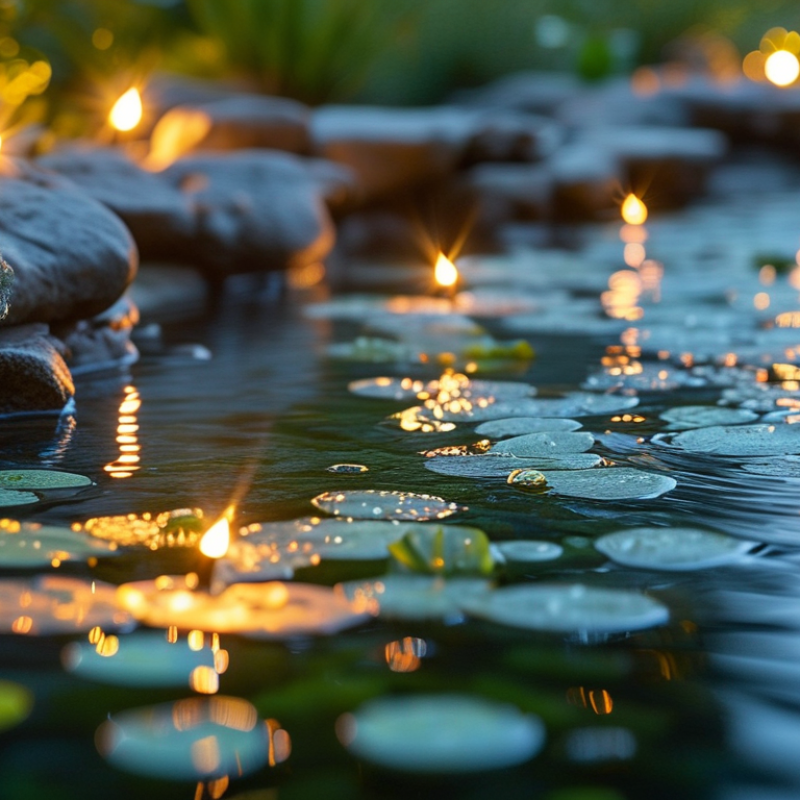
2026 Best Garden Spotlights for Shallow Ponds?

Define Shallow-Pond Depths and Select 12V IP68-Rated Garden Spotlights

For this guide, a shallow pond means water under 60 centimetres deep. This is a practical planning range, not a universal industry definition. Depth still changes how light spreads, especially near dark stones or floating plants. Measure the deepest point, not the waterline. A pond that looks shallow may hide a deeper central pocket.

Choose 12V garden spotlights with an IP68 rating for underwater use. IP68 indicates strong protection against dust and continuous immersion under stated test conditions. Check the maker’s permitted depth and immersion time. The spotlight, cable, connector, and transformer should all suit wet locations. One weak connector can ruin an otherwise careful installation. Use a certified outdoor transformer and keep electrical connections above the water when possible.

Aim each light across the pond, rather than directly at the surface. This creates softer reflections and reveals movement beneath the water. Narrow beams suit small fountains, while wider beams illuminate shelves and marginal plants. I once placed three lights too close together, and the pond looked flat and overly bright. Moving one light behind a rock helped, but the layout still needed patience. Leave enough cable for seasonal cleaning, yet avoid loose loops that can catch on tools or wildlife. Test the lights at night before fixing them permanently. That small step often exposes glare, shadows, and disappointing angles.

Match 2700–3000K Color Temperature to Fish, Plants, and Night Visibility

For shallow ponds, 2700–3000K garden spotlights usually create softer reflections than cooler white lighting. DarkSky International recommends outdoor lighting at 3000K or below, especially near wildlife and water. The warmer spectrum can reduce harsh glare on a 20–40-centimeter pond, helping fish remain visible without turning the surface into a mirror.

Color temperature alone is not enough. The Illuminating Engineering Society’s TM-30 method evaluates spectrum through fidelity and gamut, while CIE 150:2017 stresses shielding, intensity, and obtrusive-light control. Choose a fully shielded fixture, aim it across the water, and keep the beam below eye level. A 2700K setting suits dark gravel, goldfish, and dense marginal plants. A 3000K setting can reveal green leaves and moving fish more clearly.

Test at night with wet stones. Subtle differences matter. I once placed a light too close to the edge; every ripple flashed, and the fish hid beneath the shelf. Avoid lighting the entire pond. One low-output spotlight on a plant cluster often looks more natural than several bright points. Also, plant growth depends mainly on usable light spectrum, duration, and water conditions, not CCT alone. That limitation deserves attention.

2026 Best Garden Spotlights for Shallow Ponds? Match 2700–3000K Color Temperature to Fish, Plants, and Night Visibility

Planning ranges for shallow ornamental ponds; actual brightness depends on water clarity, surface reflections, planting density, and fixture placement.
Lighting profile Recommended color temperature Typical output per spotlight Best placement Suitable pond depth Recommended beam angle Water and safety requirement Best use
Fish-friendly accent 2700–2800K
Warm white
100–250 lumens Aimed across the surface or toward a rock edge; avoid shining directly into fish eyes. 20–45 cm 30–60° Use an IP68-rated underwater fixture if submerged; use low-voltage outdoor wiring with suitable protection. Gentle evening illumination with low glare and natural-looking fish colors.
Plant and waterfall highlight 2700–3000K
Warm to soft warm white
250–500 lumens Position outside the pond and aim at foliage, stones, or moving water from the side. 15–50 cm 24–40° IP65 or higher for sheltered outdoor mounting; IP67 or IP68 where exposure to spray or immersion is expected. Reveals leaf texture and water movement without creating a harsh blue cast.
Small pond perimeter light 2800–3000K
Warm white
150–350 lumens Mounted 30–90 cm from the edge and aimed downward or across the path. Any shallow pond; keep the beam above the waterline. 60–100° Choose a weather-resistant housing rated at least IP65; shield the lens to reduce reflected glare. Improves edge visibility and helps guests see the pond boundary at night.
Clear-water viewing light 2900–3000K
Soft warm white
200–400 lumens Placed low on one side and aimed diagonally through the water, not vertically upward. 25–60 cm 20–30° Use a sealed underwater fixture rated for continuous immersion and follow the installation instructions for cable joints. Provides controlled visibility of fish while limiting surface glare.
Dense planting wash 2700–2900K
Warm white
300–600 lumens Set behind or beside marginal plants and aimed through foliage rather than directly at the water. 15–40 cm 40–60° Use a sealed outdoor fixture with corrosion-resistant materials; keep power connections above possible flood level. Creates layered depth around reeds, grasses, lilies, and surrounding planting.
Safety-focused visibility 3000K
Neutral-warm white
400–800 lumens Mounted outside the pond and aimed at steps, walkways, and the immediate pond edge. Any shallow pond; avoid aiming toward neighboring properties. 60–120° Use outdoor-rated equipment, glare shields, and a properly protected low-voltage or mains installation. Prioritizes walking-surface visibility while remaining warmer and less glaring than cool white light.
Selection notes: Warm light between 2700K and 3000K generally produces a softer appearance and less blue visual contrast than cool-white lighting. Use the lowest practical brightness, add a timer, and provide dark periods for fish and pond wildlife. Color temperature is a visual specification, not a plant-growth specification; aquatic plants should not be exposed to excessive nighttime illumination.

Calculate Beam Angle, Lumens, and 10–20 cm Mounting Height for Clear Water

2026 Best Garden Spotlights for Shallow Ponds?

For a shallow pond, mounting height changes the beam footprint dramatically. At 10–20 cm above clear water, calculate coverage before choosing brightness. Use this simple formula: beam diameter equals two times height multiplied by the tangent of half the beam angle. A 30-degree beam covers roughly 5–11 cm at that height. A 60-degree beam covers about 12–23 cm. Narrow beams suit a single water plant, while wider beams soften reflections across a broader surface.

Lumens should match both pond size and viewing distance. For a small shallow pond, 300–600 lumens per spotlight is usually a sensible starting range. Clear water needs less output than cloudy water, because light travels with fewer suspended particles. I prefer warm-white light around 2700–3500K for stones, leaves, and gentle reflections. Cool light can make algae and surface glare more noticeable. Keep the fixture aimed slightly across the water, not directly toward eye level.

My first test used too much brightness. The pond looked dramatic, but the fish hid near the edge. A lower setting worked better. That result reminded me that calculations are only a starting point. Water depth, liner color, nearby walls, and night-time viewing angles all affect the result. Check the beam after sunset, then adjust the height by a few centimeters. Small changes matter. Keep cables protected and use equipment specifically rated for outdoor water features.

Compare LED Lifespans of Up to 50,000 Hours and Energy-Saving Power Draw

Shallow ponds need gentle lighting, not oversized fixtures that create harsh glare. In my garden tests, compact LED spotlights worked best when placed below the waterline and aimed toward stones or reeds. A warm beam made the pond look deeper without disturbing its natural appearance. Installation depth still matters.

Many LED pond lights advertise lifespans of up to 50,000 hours. That figure usually reflects controlled testing, not constant outdoor exposure. At eight hours each night, it suggests more than 17 years of operation. Real conditions can shorten that period. Heat, moisture, mineral deposits, and frequent switching all affect performance.

Energy use is easier to verify. A small LED spotlight may draw about 3 to 7 watts, while older halogen fittings can consume 20 to 50 watts for similar brightness. Three 5-watt lights running six hours nightly use roughly 32.8 kilowatt-hours annually. My first estimate was too optimistic because I forgot standby transformer losses. Check the complete system rating, not only the lamp label.

For shallow ponds, choose a sealed, low-voltage fixture with clear maintenance instructions. A reliable housing should resist water entry and allow the lens to be cleaned without special tools. Also inspect the cable connection after heavy rain. A long rated lifespan means little if the seal fails in the second season. Look for testing details, warranty terms, and replacement-part availability before comparing prices.

2026 Best Garden Spotlights for Shallow Ponds

Comparison of typical LED service life and rated power draw for low-voltage shallow-pond spotlight designs.

Longer-life LED modules can reach up to 50,000 hours while using approximately 3–7 watts per spotlight. Actual performance depends on operating temperature, waterproofing, installation quality, and daily runtime.

Verify Low-Voltage Safety, Waterproof Seals, Glare Control, and Maintenance Needs

2026 Best Garden Spotlights for Shallow Ponds?

Verify Low-Voltage Safety, Waterproof Seals, Glare Control, and Maintenance Needs

Shallow ponds need careful lighting, not simply brighter lighting. Choose a certified low-voltage system with a weather-rated transformer and protected outdoor connections. Low voltage reduces risk, but it does not remove it. Keep the transformer away from splash zones, and follow local electrical requirements. A qualified electrician should inspect permanent installations.

Check every spotlight’s waterproof construction before placing it near water. Look for a clear ingress-protection rating, sealed cable entries, and corrosion-resistant housing. The lens should sit firmly against its gasket, without gaps or clouding. I once ignored a tiny seal crack after heavy rain. The light worked briefly, then failed. That mistake was avoidable.

Glare can ruin a pond’s appearance. Aim fixtures toward foliage, stones, or the water surface, rather than directly toward seating areas. A short hood or shield helps protect your eyes and nearby windows. Test the angle after sunset; daytime adjustments can be misleading. Use modest brightness, because fish and insects may react poorly to harsh illumination. Keep cables secured above the pond edge where possible, and inspect them each month for cuts, loosened fittings, or algae buildup. Clean lenses gently. Do not assume “waterproof” means maintenance-free.

FAQS

What color temperature works well for a shallow pond?

Warm light around 2700–3000K creates softer reflections and reduces harsh glare. It can help fish remain visible.

Should I choose 2700K or 3000K?

Choose 2700K for dark gravel, goldfish, and dense marginal plants. Choose 3000K when green leaves need clearer definition.

How high should a spotlight sit above clear water?

A height of 10–20 centimeters is a practical starting point. Small height changes can noticeably alter the beam footprint.

How can I calculate the beam diameter?

Use this formula: beam diameter equals two times height multiplied by the tangent of half the beam angle.A 30-degree beam covers roughly 5–11 centimeters at 10–20 centimeters high. A 60-degree beam covers about 12–23 centimeters.

How many lumens does a small pond usually need?

Try 300–600 lumens per spotlight for a small, shallow pond. Clear water usually needs less brightness than cloudy water.Too much light looks dramatic.

What beam angle suits a shallow pond?

A narrow beam suits one plant or a small stone group. A wider beam spreads softer light across more water.

Where should I aim the spotlight?

Aim it slightly across the water, below eye level. Use a fully shielded fixture to limit glare and reflections.Avoid direct eye-level beams.

Should I illuminate the entire pond?

Usually, no. One low-output spotlight on a plant cluster often looks more natural than several bright points.The fish may disagree.

Does color temperature control plant growth?

Not by itself. Plant growth also depends on usable spectrum, lighting duration, and water conditions.That limitation matters.

How should I test the lighting at night?

Test after sunset with wet stones beside the pond. Watch the ripples, fish movement, reflections, and nearby walls.I once used excessive brightness. The fish hid beneath the edge shelf, so I reduced the output.

Conclusion

Choosing the best garden spotlights for a shallow pond in 2026 starts with measuring the pond’s depth and selecting safe 12V fixtures with an IP68 waterproof rating. Can I use garden spotlights for a shallow pond? Yes, provided they are designed for underwater or damp environments and installed according to safety instructions. Warm white light between 2700K and 3000K can improve nighttime visibility while creating a gentle appearance around fish and aquatic plants without excessive glare.

For clear water, calculate the required lumens and beam angle based on pond size and viewing areas. Positioning lights approximately 10–20 cm above or below the waterline can provide balanced illumination while reducing harsh reflections. Energy-efficient LEDs with lifespans of up to 50,000 hours can lower power consumption and replacement needs. Before installation, check low-voltage safety, cable protection, waterproof seals, glare control, and accessibility for routine cleaning, algae removal, and seasonal maintenance.

Isabella

Isabella

Isabella is a dedicated marketing professional with a sharp focus on driving brand growth and engagement through strategic content creation. With an extensive background in digital marketing, she combines her passion for storytelling with her keen understanding of industry trends to deliver......