Oregon Light Oregon Light

How to Calculate Voltage Drop for Long Distance Garden Lights?

Time:2026-06-13 Author:Sophia
0%

When planning outdoor lighting, understanding how to calculate the voltage drop for long-distance garden lights is crucial. Voltage drop occurs when electrical current travels over long distances, resulting in reduced light output and efficiency. Studies show that a voltage drop exceeding 3% can significantly impact lighting performance (National Electrical Code). This knowledge is vital for homeowners and landscapers alike.

Garden light installations often face challenges such as wire diameter, distance from the power source, and total wattage. For example, using smaller gauge wires increases resistance, resulting in a greater voltage drop. According to industry reports, many DIY installations overlook this, causing frustration and dissatisfaction. Knowing how to calculate this drop can prevent unnecessary rework and expenses.

In a world where energy efficiency is a goal, addressing voltage drop in garden lights is essential. Proper calculations ensure optimal light output and extended fixture longevity. As you delve into the specifics, consider this question: How to calculate the voltage drop for long-distance garden lights?
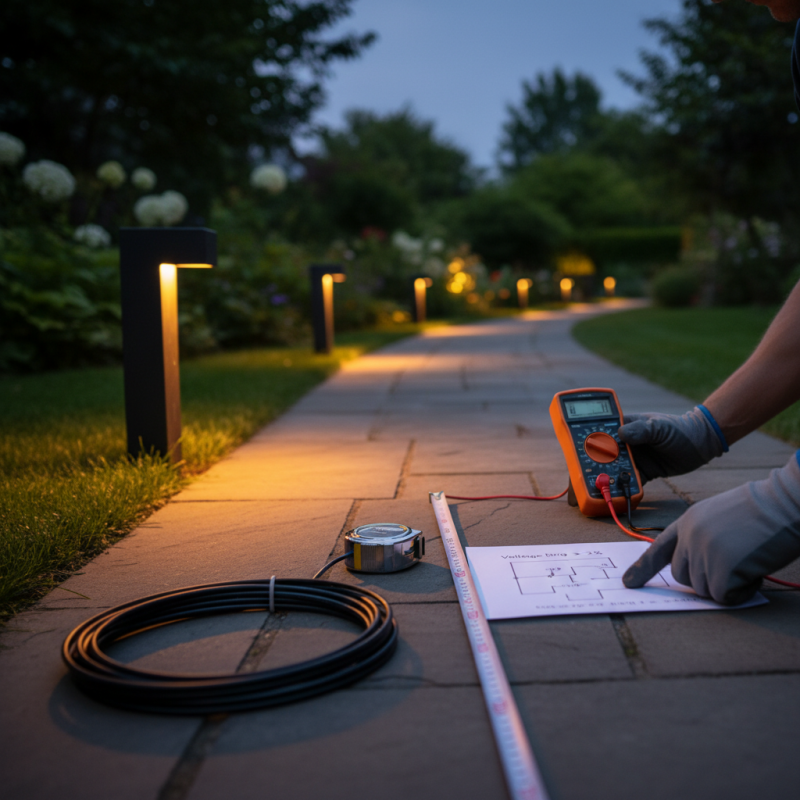
How to Calculate Voltage Drop for Long Distance Garden Lights?

Understanding Voltage Drop and Its Importance in Lighting

Voltage drop is a critical factor when installing long-distance garden lights. Understanding this concept helps in maintaining optimal brightness and performance. Voltage drop occurs when electrical current flows through wires, losing energy along the way. For garden lights, excess voltage drop can lead to dim lighting or even operational failure.

When planning your garden lighting, consider the length of your wire runs. Longer distances increase resistance, which leads to more voltage drop. This challenge can be addressed by using thicker wires or reducing the distance between lights. The goal is to keep the voltage drop below 3% for effective illumination.

Tips for Managing Voltage Drop:
Use the right wire gauge for your garden lights. Thicker wires can carry more current with less resistance.
Additionally, keep lights closer together if possible. Less distance means less drop.
Check the total wattage of your lights. Knowing the total load helps you choose the appropriate wire size.

Ultimately, planning and understanding voltage drop can make a significant difference in your garden lighting effectiveness. Recognizing these factors allows for better decision-making and ensures a brighter, more inviting outdoor space.

Factors Affecting Voltage Drop in Garden Lighting Systems

When planning garden lighting, understanding voltage drop is crucial. Several factors influence this phenomenon. The distance between the power source and lighting fixtures plays a significant role. Longer wires lead to greater resistance, increasing voltage drop. For instance, research indicates that voltage drop can reach 3% over long distances, which may result in dimmer lights.

Wire gauge is another essential consideration. Thicker wires, like 12 AWG, can minimize resistance, while thinner wires, such as 14 AWG, are more prone to higher drops. Electrical professionals suggest that using thicker wire for extended runs can ensure optimal performance of garden lights. The total wattage of the connected fixtures also affects voltage drop. Higher wattage increases current flow, exacerbating the drop.

Moreover, ambient temperature impacts resistance levels. Hot environments can lead to higher resistance in wires, further influencing voltage drop. A report from the National Electrical Contractors Association emphasizes monitoring these factors for effective garden lighting design. Balancing wire size, distance, and load is vital for achieving the desired brightness and reliability in outdoor lighting.

Voltage Drop in Long Distance Garden Lighting Systems

The following bar chart illustrates the voltage drop experienced over various distances in garden lighting systems. The data reflects typical scenarios based on standard cable sizes and load conditions.

Step-by-Step Calculation of Voltage Drop for Long Runs

When calculating voltage drop for long distance garden lights, accuracy is essential. This ensures your lights shine brightly without flickering. To start, you'll need to know the total wattage of your lights and the length of the cable run. Typically, longer runs lead to a higher voltage drop, affecting performance.

Use the formula: Voltage Drop (VD) = (2 × Length × Current × Resistance) / 1000. This helps determine how much voltage is lost. Different wire gauges have varying resistance levels. For example, a 12-gauge wire can handle more current than a 14-gauge wire without excessive voltage drop. Consider the distance and wattage when choosing wire size for your setup.

Tips: Always double-check your calculations. Small errors can lead to dim lights or inefficient energy use. Keep in mind that environmental factors—like temperature—also affect wire performance. If you're uncertain about your measurements, consulting a professional can provide peace of mind and ensure a safe installation for your garden lighting.

Tips for Minimizing Voltage Drop in Landscape Lighting

When planning garden lighting, voltage drop is a key concern. Long cable runs can reduce voltage, affecting light performance. To minimize these drops, select appropriate wire gauge and keep cable lengths short. Use thicker wires for longer distances to maintain voltage levels. This basic step can significantly enhance the efficiency of your lights.

Consider using LED lights, which are more efficient and require less power. You might think all lights perform equally, but energy-efficient options bring brightness without heavy energy draw. Locations of power sources matter too. If lights are far from the source, ensure the path is well-planned.

Regularly check connections and wires for wear and tear. Faulty connections can lead to more voltage loss. Sometimes, you might underestimate the impact of nearby electrical devices. They can interfere with your setup. Reflect on these factors to find areas for improvement in your garden lighting design.

Choosing the Right Wire Gauge for Long Distance Garden Lights

When planning long-distance garden lighting, selecting the right wire gauge is crucial. The American Wire Gauge (AWG) system helps determine which wire is appropriate based on distance and load. For example, outdoor lighting circuits often require a gauge of 12 AWG for runs exceeding 100 feet. This gauge minimizes voltage drop, ensuring bright and efficient lighting.

Voltage drop is a concern for any electrical installation. With every foot of wire, resistance increases, leading to diminished electrical flow. According to the National Electrical Code, a maximum voltage drop of 3% is recommended for branch circuits. Therefore, if you're illuminating a pathway at 200 feet, a larger gauge such as 10 AWG may be necessary. This choice can prevent excess heat and reduce the risk of failure.

Wire insulation type also matters. For outdoor lighting, wet-rated wire is essential to withstand moisture. However, not all wire types are created equal. It’s essential to evaluate specific needs based on the landscape and lighting design. While a thicker wire might appear more expensive initially, the investment can lead to longevity and performance. Keep in mind that overlooking these details could result in frustrating dim lights or premature wire degradation.

FAQS

: What is voltage drop?

: Voltage drop occurs when electrical current loses energy through wires, affecting performance.

Why is voltage drop important for garden lights?

Excessive voltage drop can lead to dim lighting or operational failure in garden lights.

How can I manage voltage drop in my garden lighting?

Use thicker wires, keep lights closer together, and monitor the total wattage for efficiency.

What wire gauge is recommended for long distances?

For runs over 100 feet, a 12 AWG wire is typically recommended to minimize voltage drop.

How do LED lights help with voltage drop?

LED lights are more efficient and require less power, reducing the impact of voltage drop.

What factors should I consider when planning cable runs?

Consider the distance from the power source, wire thickness, and potential interference from nearby devices.

What can happen if I use the wrong wire gauge?

Using the wrong wire gauge can lead to more heat, dim lights, and premature wire failure.

How does wire insulation affect outdoor lighting?

Wet-rated wire is essential for outdoor lighting to withstand moisture and prevent damage.

Why should I check my connections regularly?

Faulty connections can increase voltage loss, leading to diminished light performance.

Are there risks with thick wires?

While thicker wires may seem costly, they ensure longevity and prevent frustrating electrical issues.

Conclusion

In the article titled "How to Calculate Voltage Drop for Long Distance Garden Lights?", the importance of understanding voltage drop in lighting systems is highlighted. Voltage drop can significantly affect the performance of garden lighting, which is critical for maintaining desired illumination levels, especially over long distances. Factors such as wire length, gauge, and the total load influence voltage drop, necessitating careful consideration during installation.

To calculate voltage drop for long runs, a step-by-step approach is provided, which enables users to determine the appropriate wire gauge to minimize potential issues. Additionally, practical tips are offered to help reduce voltage drop in landscape lighting, ensuring efficient and effective lighting solutions. By grasping these concepts, homeowners can enhance their outdoor lighting systems while addressing the challenges posed by long-distance installations.

Sophia

Sophia

Sophia is a dedicated marketing professional with an exceptional depth of knowledge about her company's products and services. With a keen understanding of market trends and customer needs, she crafts insightful blog posts that not only inform but also engage readers, enriching the company’s online......